Places: Prestbury


Widget not in any sidebars

Place Type

Parish

County

Cheshire

Deanery

Macclesfield

Causes

EDC 5/13/2 – Sir Richard Egerton, farmer of the tithes of Prestbury, contra William Andrewe.
EDC 5/14/1 – Elizabeth Smyth, otherwise Rixton, contra Giles Smyth and Margaret Barington.
EDC 5/1566/6 – John Legh, esquire, farmer of the tithes of the hamlets of Sutton and Wincle contra William Sutton and Ralph Gardner.

Prestbury

Prestbury parish was one of the largest in the diocese comprising thirty-two townships, with a circumference of about forty miles. There was a dependent chapelry in Macclesfield and several chapels of ease including Chelford and Siddington. Macclesfield was a much larger and more important settlement than Prestbury by the sixteenth century, being by then the centre of local ecclesiastical and legal administration.

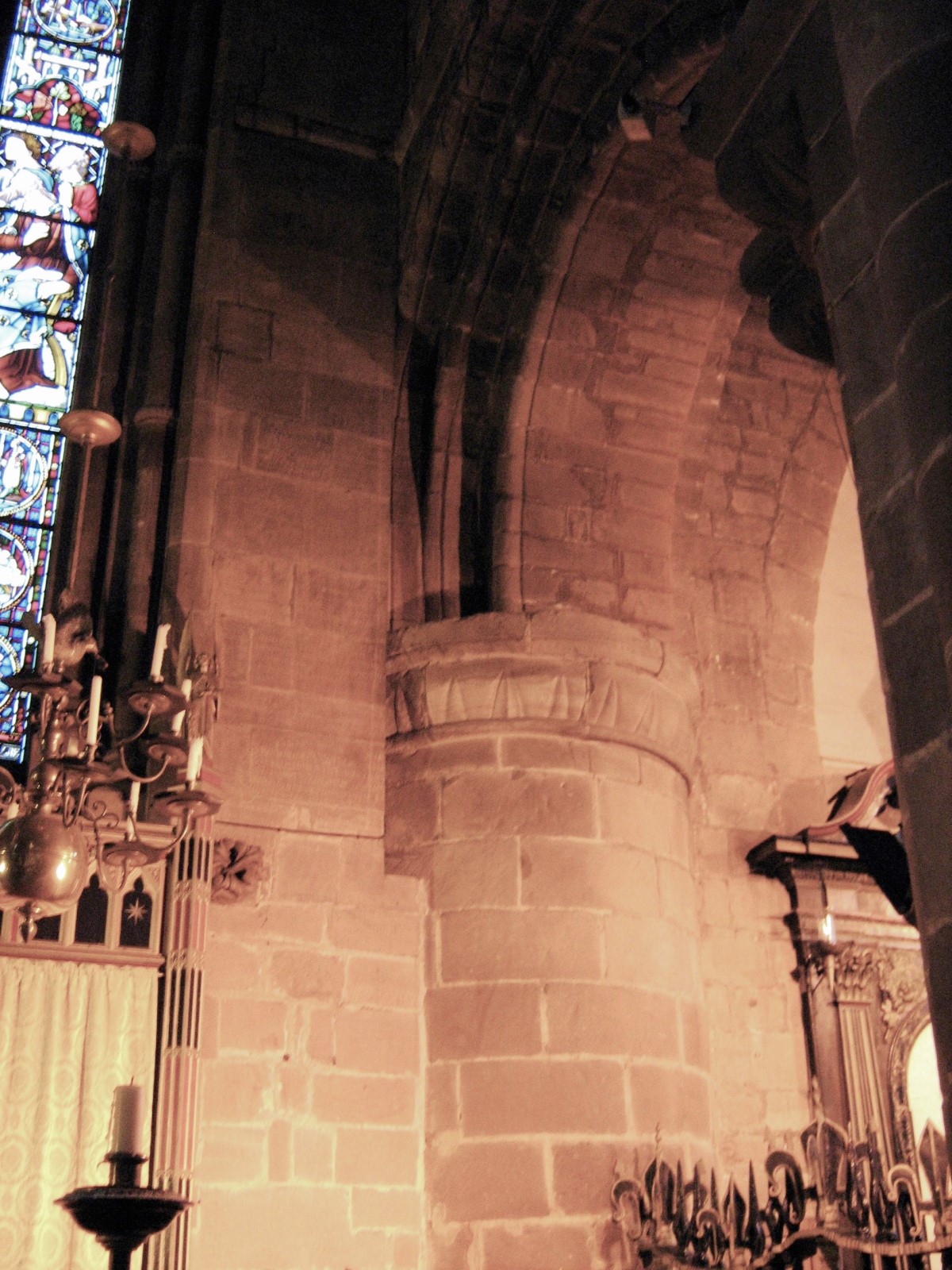
There has probably been a church in Prestbury since Saxon times and a small Norman chapel building still stands in the churchyard. The parish had been granted to the monastery of St Werburgh in the twelfth century and following the dissolution of the monastery Sir Richard Cotton bought the manor and advowson. Both were acquired shortly afterwards by Thomas Legh of Adlington, who became the lay rector. Other branches of the Legh family lived in the parish, including the Leghs of Ridge in the township of Sutton.

In the town of Prestbury, a timber-framed vicarage, dating from the sixteenth century, known as the Priest’s House still stands almost opposite the church and further down the main street is the Legh Arms, dating from the late sixteenth century. This is partly timber-framed and has a roof of local Kerridge slate.

Sources

J. P. Earwaker, East Cheshire Past and Present, vol. 2 (London, 1880), pp. 177-525

George Ormerod, The History of the County Palatine and City of Chester (second edition, revised and enlarged by T. Helsby, London, 1882), vol. iii, pp. 646-653

Click to view fullscreen

Places: Alderley


Widget not in any sidebars

Place Type

Parish

County

Cheshire

Parish

Alderley

Deanery

Macclesfield

Causes

EDC 5/9/2 – Elizabeth Stapultun contra Thomas Stapultun
EDC 5/1566/7 – Downes marriage ratification

ALDERLEY

Alderley parish comprised the townships of Over Alderley, Nether Alderley and Great Warford and may have developed from a chapel of ease in Prestbury parish. The escarpment known as Alderley Edge is the site of copper mines, worked from the Bronze Age to the twentieth century, and sandstone was quarried there.

The parish church, built in part from this local sandstone, is situated in the township of Nether Alderley. Little survives of the fourteenth-century building which forms the basis of the present church, the tower was added in 1530 and the Stanley family pew in about 1600.

The Stanleys are historically associated with the parish and their pew is accessible only by a flight of stone steps outside the church. The front of the pew is now decorated with six coats of arms of wives of the Stanleys from 1600 to 1800.

The font, which had been buried, was rediscovered in 1821 and is thought to date from the fourteenth century. The remains of a medieval stone cross survive in the churchyard, where an ancient yew tree also stands.

The grooves in the wall of the porch are said to have been caused by arrows being sharpened.

A sixteenth-century sandstone water mill with a roof of Kerridge slate at Nether Alderley now belongs to the National Trust. This mill was close to the house where the Stanley family lived. The house, having been rebuilt in the late sixteenth century, was rebuilt again in the early eighteenth century but burned down in 1779.

Sources:

J. P. Earwaker, East Cheshire Past and Present, vol. 2 (London, 1880), pp. 594-642 (images from this volume courtesy of HathiTrust)

George Ormerod, The History of the County Palatine and City of Chester, (second edition, revised and enlarged by T. Helsby, London, 1882), vol. iii, pp. 565-585


Click to view fullscreen

Places: Bowdon


Widget not in any sidebars

Place Type

Parish

County

Cheshire

Parish

Bowdon

Deanery

Frodsham

Causes

EDC 5/1575/4 – Urian Bowdon contra William Charlton and Ellen Lether

Places: Chester, St John


Widget not in any sidebars

Place Type

Parish

County

Cheshire

Parish

Chester, St John

Deanery

Chester

Causes

EDC 5/10/1 – William Aldersey contra Thomas Wright and Richard Broster
EDC 5/1580/4 – Elizabeth Meycock contra Thomas Davie
EDC 5/1591/2 – Andrew Brednam M.A., vicar of St John’s in Chester contra Henry Aneon, senior

CHESTER, St JOHN

The collegiate church of St John played an important role in the religious and civic life of Chester and was home to a number of chantries plus the guild or fraternity of St Anne, many of which had chapels within the church. It had acquired an important relic, the Rood of Chester, which generated income for the college from the offerings of pilgrims until it was removed in the mid-1530s.

The consistory court of the archdeacon of Chester was held at St John’s until it was removed to the cathedral after the foundation of the new diocese in 1541. In 1547 or 1548 the college was dissolved, its church became a parish church and the advowson passed to the Crown by whom it was granted or sold to a series of lay patrons, including Alexander Cotes who acquired it in 1587 and came into conflict with the parishioners.

After the dissolution the building was too large for the parishioners to maintain, the eastern part fell into decay and in the 1570s the north-west tower collapsed onto the west end of the church which was rebuilt at great cost.

Sources

The volumes of the Victoria County History of Cheshire covering the city of Chester are available online:

https://www.british-history.ac.uk/vch/ches/vol5/pt2/pp125-133

https://www.british-history.ac.uk/vch/ches/vol5/pt2/pp133-156


Click to view fullscreen

Places: Farndon


Widget not in any sidebars

Place Type

Parish

County

Cheshire

Parish

Farndon

Deanery

Chester

Causes

EDC 5/1566/12 – Hugh Dodd, rector of Coddington, contra Richard Allen of Farndon regarding the tithes of Bechin
EDC 5/1587/8 – Katherine Clubb contra John Ledsam

FARNDON

Farndon was a small parish close to the Welsh border on the river Dee. It comprised the townships of Farndon, Barton, Clutton and Crewe, plus a moiety of Churton.

The church building, which may have been constructed in the thirteenth century, was badly damaged by fire during the Civil War, during the struggle to control the river crossing. It was subsequently rebuilt, and the only remaining part of the medieval building is the tower. A window of painted glass, restored in the nineteenth century, commemorates Royalist soldiers of the Civil War. An illustration of the window, shown below, is from a drawing by the Very Rev Hugh Cholmondley, Dean of Chester, contributed to the 1819 edition of Ormerod’s History of the county (between pages 408 and 409 of volume 2).

The church was appropriated to the college of St John in Chester, although the rectory was farmed out at various times. Following the dissolution of the college in 1547 or 1548 the parish was impropriated, and by the nineteenth century it was the property of the family of Grosvenor of Eaton who were responsible for appointing a perpetual curate to serve the parish.

At times parts of the tithes were sold or leased.

Sources

Douglas Jones, The Church in Chester 1300-1540 (Chetham Society 3rd series, 7, 1957), pp. 51, 88.

George Ormerod, The history of the county palatine and city of Chester: compiled from original evidences (London, 1819), vol. ii

George Ormerod, The History of the County Palatine and City of Chester (second edition, revised and enlarged by T. Helsby, London, 1882), vol. ii, pp. 742-745

Click to view fullscreen

Places: Holt


Widget not in any sidebars

Place Type

Chapelry

County

Denbighshire

Parish

Gresford

Deanery

St Asaph

Causes

EDC 5/1587/8 – Katherine Clubb contra John Ledsam

HOLT

Although it was a chapelry of the parish of Gresford, which was in the diocese of St. Asaph, Holt was in the diocese of Chester at this time.

Places: Churton Heath


Widget not in any sidebars

Place Type

Chapelry

County

Cheshire

Parish

Chester, St Werburgh

Deanery

Chester

Causes

EDC 5/1575/3 – John Vawdrey and Richard Vawdrey contra Ralph Calveley

CHURTON HEATH

Also known as Church in Heath, Churchenheath, or several other variants, the chapel here was also known as Bruera Chapel. Although it was part of the parish of St Werburgh in Chester, it is situated about six miles south of Chester.

Places: Duckworth


Widget not in any sidebars

Place Type

Settlement

County

Lancashire

Parish

Whalley

Deanery

Blackburn

Causes

EDC 5/17/4 – Isabelle Holden, wife of Ralph Holden, esquire, of Duckworth contra Roger Rishton

DUCKWORTH

Duckworth was part of the township of Oswaldtwistle  in the hundred of Blackburn and the parish of Whalley.

Places: Church


Widget not in any sidebars

Place Type

Chapelry

County

Lancashire

Parish

Whalley

Deanery

Blackburn

Causes

EDC 5/17/4 – Isabelle Holden, wife of Ralph Holden, esquire, of Duckworth contra Roger Rishton

CHURCH

There was a chapel of ease for the parish of Whalley in the township of Church or Church-Kirk. In the cause reference EDC 5/17/4 dating from 1556 it is referred to as a parish, although it was still a chapelry at that time.

Places: Manchester


Widget not in any sidebars

Place Type

Parish

County

Lancashire

Parish

Manchester

Deanery

Manchester

Causes

EDC 5/11/2 – Sir Robert Worsley
EDC 5/9/1 – Francis Buckley contra Elizabeth Traves
EDC 5/1580/11 – Jane Chetam, wife of Henry Chetam, contra Richard Hall, clerk. Richard Hall was one of the Fellows of Manchester Collegiate Church.
EDC 5/1580/12 – Ralph Shalcrosse contra Robert Ridinges

MANCHESTER

The parish of Manchester covered a wide area and comprised numerous townships, including Manchester and Salford. The township of Manchester occupied a significant strategic position at the crossing of two important roads and the confluence of the river Irwell and two of its tributaries. It was the site of an important Roman castle at the confluence of the Irwell and the Medlock, and this area is still known as Castlefield. By 1536 it was said to be the most populous town in Lancashire.

A church in Manchester dedicated to St Mary is mentioned in the Domesday Book, the patronage belonged to the owners of the manor, latterly the family of le Warre. The oldest parts of the building date from about 1422 to 1500, although some parts may be older. It was substantially restored and rebuilt on several occasions in the nineteenth century and also in the twentieth century following extensive bomb damage during the Second World War, although much of the early woodwork and fittings such as the choir stalls survived intact.

In 1421 a college was established there by the le Warre family, and many of its buildings still survive, some now occupied by Chetham’s library and school. In the sixteenth century, the position of the college was uncertain as it was dissolved under Edward VI, refounded by Mary, dissolved again early in Elizabeth’s reign but then refounded again by her in 1578. Following the Marian foundation the Crown assumed patronage of the parish.

William Chaderton, bishop of Chester from November 1579, moved his establishment to Manchester after his appointment as warden of Manchester College in June 1580. From this base as a member of the Ecclesiastical Commission he worked to suppress Catholicism in the diocese and in an effort to encourage conformity imprisoned many recusants, including a number of gentry, in the New Fleet prison newly-constructed in Manchester on the banks of the river Irwell. In about 1593 he returned to Chester but continued to hold the wardenship of Manchester College with the see of Chester until 1595. The controversial mathematician, astrologer and alchemist, John Dee, succeeded him as warden of the college in 1595.

The cloth industry developed from the fourteenth century with the production of ‘Manchester cottons’, woollen cloth made from unprepared fleeces. The textile industry continued to develop over the centuries, with the production of linen being added to that of woollen goods. By the middle of the eighteenth century the production of cotton cloth developed, both for consumption at home and overseas and increasing mechanisation of the cloth industry from that time made the area increasingly important as a centre of production. Other industries also developed such as iron foundries, engineering factories and paper mills. The trading and commercial growth of the town of Manchester was facilitated by the construction of canals, such as the Bridgewater canal linking the town to the port of Liverpool, and railways such as the Manchester to Liverpool line which opened in 1830.

As the town grew with the industrialisation of the area a diocese was established in 1847, and the parish church became the cathedral.

Sources:

Christopher Haigh, ‘Chaderton, William (d. 1608)’, Oxford Dictionary of National Biography (online edition) https://doi.org/10.1093/ref:odnb/5011

‘The city and parish of Manchester: Introduction ‘, in A History of the County of Lancaster: Volume 4, ed. William Farrer, J Brownbill( London, 1911), British History Online https://www.british-history.ac.uk/vch/lancs/vol4/pp174-187 [accessed 6 January 2025]

‘Manchester: The parish and advowson’, in A History of the County of Lancaster: Volume 4, ed. William Farrer, J Brownbill( London, 1911), British History Online https://www.british-history.ac.uk/vch/lancs/vol4/pp192-204 [accessed 6 January 2025]

‘Colleges: Manchester’, in A History of the County of Lancaster: Volume 2, ed. William Farrer, J Brownbill( London, 1908), British History Online https://www.british-history.ac.uk/vch/lancs/vol2/p167 [accessed 6 January 2025]

‘Malpas – Manchester’, in A Topographical Dictionary of England, ed. Samuel Lewis( London, 1848), British History Online https://www.british-history.ac.uk/topographical-dict/england/pp221-247 [accessed 6 January 2025]

Historic England
Cathedral Church of St Mary, Fennell Street (1218041)
https://historicengland.org.uk/listing/the-list/list-entry/1218041  National Heritage List for England

Click to view fullscreen